
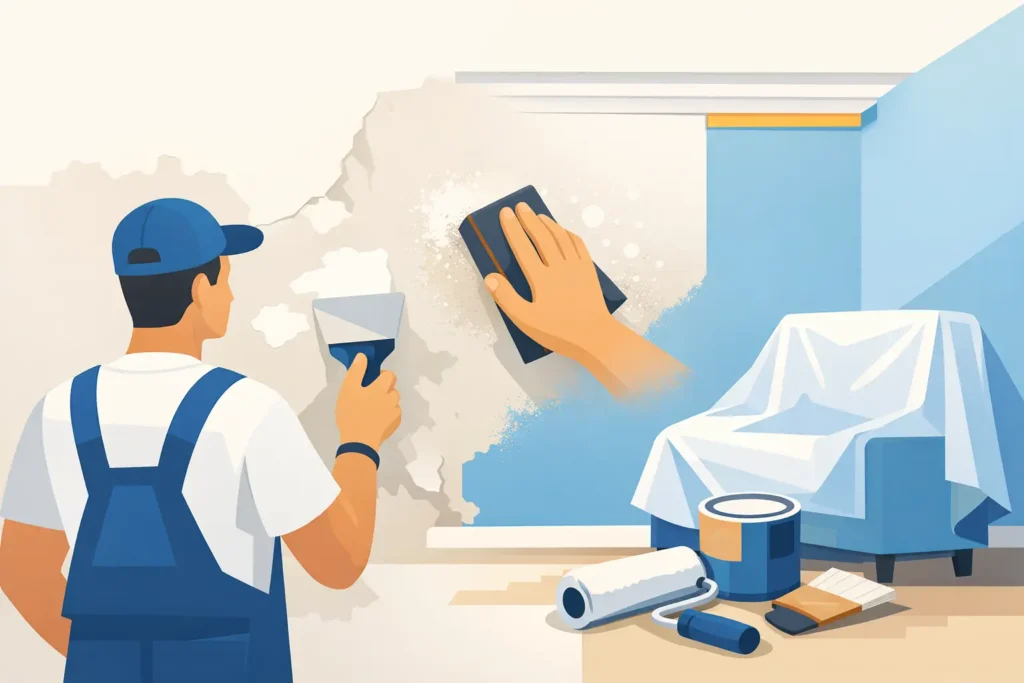
Fresh paint fails for predictable reasons. Peeling edges, patchy sheen, roller lines, and hairline cracks showing through usually do not start with the paint itself. They start with poor prep. If you want to know how to prepare walls before painting, the real job begins before the first coat is opened.
That matters even more when you are repainting an occupied home, a newly renovated unit, or a commercial space on a tight schedule. Good wall preparation saves time later, reduces rework, and gives you the kind of finish that actually looks new instead of just newly painted.
Why wall prep decides the final result
Paint does not hide surface problems nearly as well as most people expect. In fact, matte and low-sheen finishes can soften minor flaws, but they still reveal dents, uneven patches, dust contamination, and old peeling paint once light hits the wall at an angle.
Preparation is what creates adhesion, consistency, and a cleaner finish. It is also where professionals control risk. If there is moisture damage, chalking, grease, mold spotting, failed sealant, or loose filler, painting over it only delays the problem. The finish may look acceptable for a week, then defects start returning.
This is why a proper contractor treats prep as a system, not an afterthought. The steps are straightforward, but they need to be done in the right order.
How to prepare walls before painting: the step-by-step process
1. Clear the area and protect what stays
Before touching the wall, create a workable site. Move furniture away from the walls, remove loose items, and cover floors, switches, fixtures, and built-ins. If the property is occupied, this stage matters more than most owners realize. Dust travels, filler drops, and sanding residue settles everywhere.
In homes, the goal is simple – protect daily life while the work is underway. In offices and commercial units, proper masking also helps keep operations moving with less disruption. Fast completion only works when protection is done properly from the start.
2. Inspect the wall under real light
A quick glance is not enough. Walls should be checked for cracks, nail pops, bubbling paint, stains, moisture marks, mildew, hollow patches, and uneven old repairs. Look closely around windows, bathrooms, air-conditioning lines, and corners where movement or dampness often shows up first.
This is also where product decisions begin. Not every wall needs the same treatment. A dry bedroom wall with minor scuffs is very different from a kitchen wall with grease buildup or an exterior-facing internal wall with past water intrusion. The right preparation depends on the actual condition, not a one-size-fits-all checklist.
3. Clean the surface properly
Paint bonds to surfaces, not to dust, soap residue, grease, or powdery old paint. That is why cleaning comes before patching in many cases. For general interior walls, dry dust removal followed by a mild wash is usually enough. Kitchens, service yards, and high-touch commercial areas often need more attention because oils and grime interfere with adhesion.
Walls must be allowed to dry fully before the next step. Rushing this part causes avoidable failures, especially in humid conditions. A wall can look dry and still hold enough moisture to weaken filler, sealer, or paint.
4. Remove loose paint and unstable material
Anything peeling, flaking, or powdering has to go. If old paint has lost bond with the substrate, painting over it just locks in a future callback. Scrape loose areas, sand rough transitions, and check whether previous repairs are still firm.
This step is where many DIY jobs go wrong. People stop at the visibly peeling spot, but the edges around it may already be weak. A proper prep job checks beyond the obvious defect so the finished wall does not fail around the repair line.
5. Repair cracks, holes, and surface damage
Once the wall is clean and stable, patching begins. Hairline cracks, dents, screw holes, and shallow chips can usually be repaired with filler. Larger cracks or recurring movement areas may need a more durable repair method, especially around joints, corners, and old renovation touchpoints.
The key is not just filling the defect. It is rebuilding the surface so it sits level with the surrounding wall. Overfilled patches create humps. Underfilled patches sink back and show through after painting. A good patch should disappear after sanding, not announce itself under the final coat.
6. Sand for smoothness and uniform absorption
Sanding is not just for making a wall feel smooth to the touch. It also evens out patch edges, removes minor surface texture, and helps create a more consistent base for primer or sealer. If this is skipped, repaired spots often flash through the finish because they absorb paint differently from the surrounding wall.
This is also where dust control matters. After sanding, walls should be wiped or vacuumed clean. Fine dust left behind can ruin adhesion and create a gritty finish.
7. Seal stains and porous repairs
Not every wall needs a full primer coat, but some definitely do. Fresh filler, repaired sections, water stains, nicotine marks, and surfaces with uneven porosity often need sealer or primer before paint. Otherwise, you get flashing, dull patches, or stain bleed-through.
This is one of those it-depends stages. If the existing surface is sound and the repaint is like-for-like in a dry room, spot sealing may be enough. If the wall has multiple repairs, discoloration, or a major color change, a broader sealing coat is usually the smarter move. It gives a more even finish and reduces surprises on the topcoat.
8. Check the wall again before painting
Professional results come from catching issues before the finish coat, not after. Once repairs are done and the surface is sealed, inspect the wall one more time under angled light. This final check often reveals shallow depressions, sanding marks, or missed edges that were not obvious earlier.
Fixing them at this stage is fast. Fixing them after two coats of paint is slower, messier, and more expensive.
Common prep mistakes that waste time and money
The most common mistake is treating wall prep like a quick prelude instead of part of the paint job itself. Another is assuming paint will cover every imperfection. It will not.
Skipping cleaning is expensive because grease and dust weaken adhesion. Painting over damp areas is risky because blistering and mold can return. Using the wrong filler in movement-prone cracks leads to visible lines reappearing. And choosing speed over drying time usually creates delays later, not efficiency.
There is also the issue of over-prepping. Not every wall needs aggressive sanding or full skim coating. The right approach is efficient, not excessive. A well-run project targets the defects that affect finish quality, then moves quickly into sealing and painting.
Residential vs. commercial prep work
In homes, prep often has to balance quality with livability. Owners want cleaner walls, but they also want minimal dust, protected flooring, and a predictable timeline. That is especially true for HDB flats, condos, and landed homes preparing for move-in or routine maintenance.
Commercial spaces have a different pressure point. The finish still matters, but speed and shutdown coordination matter just as much. Prep work may need to happen after hours, over a weekend, or in phases so business operations are not interrupted. The process is the same in principle, but the execution must be tighter.
When to handle it yourself and when to bring in a contractor
If the walls are basically sound, with only light scuffs and a few nail holes, DIY prep can be manageable. But once you are dealing with recurring cracks, moisture marks, broad patching, stain blocking, or a deadline that actually matters, professional prep usually pays for itself.
The reason is not just workmanship. It is control. A proper painting team can assess the substrate, recommend the right sealer and paint system, protect the space, complete the prep in sequence, and move into coating without the stop-start delays most owners run into on their own.
That is where a done-for-you contractor model makes practical sense. A team like Painting.com.sg handles site protection, crack patching, sealing, paint application, cleanup, and handover as one managed workflow, which is exactly how you reduce disruption and keep quality consistent.
Good painting starts with a wall that is ready to be painted, not a wall you hope the paint will rescue. If you get the prep right, everything after that moves faster, looks better, and lasts longer.
