
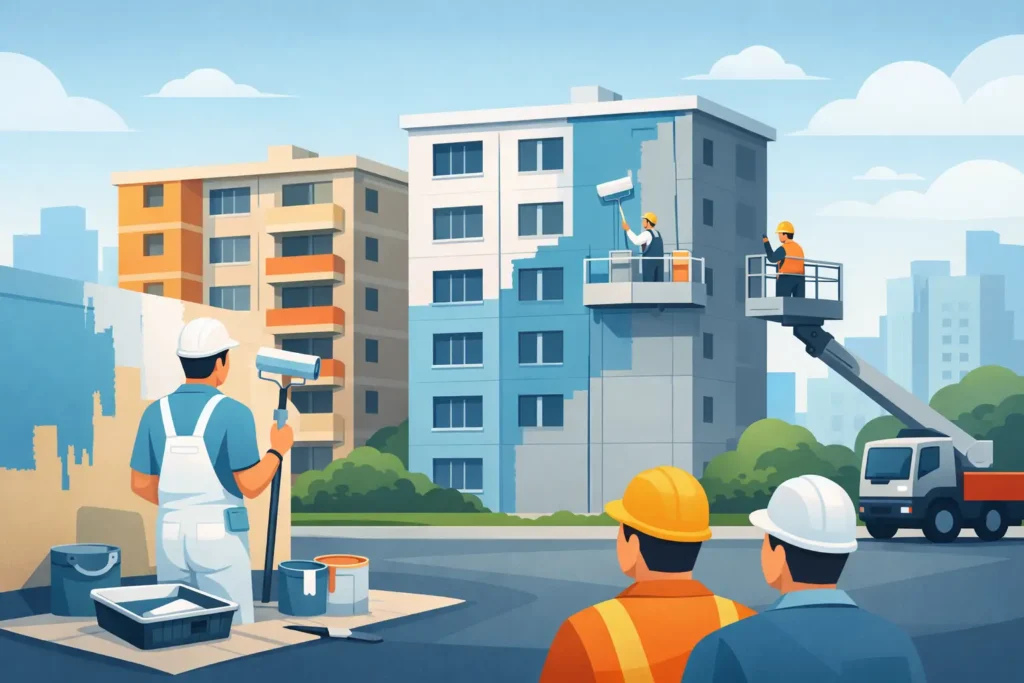
If your HDB flat is starting to show hairline cracks, uneven old paint, or that slightly dull look that no amount of cleaning fixes, repainting is usually not the hard part. The hard part is knowing what actually happens between “let’s repaint” and a clean, finished home. This guide to HDB repainting process is built for homeowners who want clear expectations, fast execution, and no surprises halfway through the job.
Why the HDB repainting process matters
A repainting job can look simple from the outside. Move furniture, apply paint, and you’re done. In reality, the finish you live with for the next few years depends far more on preparation, product choice, and workflow control than on the final coat alone.
That is why a proper HDB repainting process should feel structured, not improvised. If the contractor skips surface checks, rushes crack repairs, or uses the wrong paint series for humid rooms, the problems show up quickly. Peeling, patchiness, flashing, and early staining usually come from poor process, not bad luck.
For most HDB owners, the real priority is not just fresh walls. It is getting the whole job completed quickly, cleanly, and without having to manage ten moving parts yourself.
Step 1 – Site assessment and scope confirmation
Every efficient repainting job starts with a proper look at the unit. This is where the painter checks the number of rooms, wall condition, ceiling height, existing paint type, visible cracks, water stains, and whether there are areas that need extra treatment.
This step matters because not all HDB flats need the same amount of preparation. A recently occupied resale unit with furniture, wall fixtures, and patched sections will need a different approach from a near-empty flat before move-in. The scope also affects timeline. A straightforward repaint may be completed fast, while units with stain blocking, heavy patching, or dark-to-light color changes may need more time.
A good contractor will also confirm what is included before work starts. That means the paint brand or range, number of coats, prep work, protection, and cleanup should be clear upfront. Fixed pricing only works well when the scope is properly defined.
Step 2 – Color and paint selection
This is where many homeowners either overthink the job or leave the decision too late. The right process includes guidance on paint suitability, not just a paint chart.
Living rooms and bedrooms usually focus on finish and washability. Kitchens need better resistance to stains and frequent cleaning. Bathrooms can be trickier because moisture exposure changes what works long term. Ceilings also need the right product if you want an even, non-patchy look under lighting.
Color choice is not only about taste. Light colors can make compact HDB spaces feel bigger, but they also reveal wall imperfections more clearly if preparation is weak. Darker shades create contrast and can look premium, but they may require more coats to achieve uniform coverage, especially if the existing wall color is very different. That does not mean dark colors are a bad choice. It just means the repainting process needs to account for them.
Step 3 – Protecting the home before work begins
The fastest jobs are not the messiest jobs. They are the ones handled with a system.
Before any sanding or painting begins, floors, furniture, built-ins, switches, and fixtures should be protected. In occupied HDB flats, this step is essential because the goal is not just to repaint the home. It is to keep your daily routine intact as much as possible.
Some homeowners assume protection is a minor detail, but it affects the whole experience. Poor masking leads to extra cleanup, accidental paint marks, and avoidable frustration. A serious contractor treats protection as part of the job, not as an optional extra.
Step 4 – Surface preparation and crack repair
This is the make-or-break stage of the guide to HDB repainting process. If the wall surface is not properly prepared, fresh paint will only hide problems temporarily.
Preparation usually includes removing loose paint, sanding uneven areas, patching dents or nail holes, and repairing minor cracks. If there are water marks or signs of moisture damage, those need closer attention before any topcoat goes on. Painting over them without treatment is a short-term fix at best.
There is a trade-off here. Better preparation takes more labor and sometimes more drying time, but it also gives a smoother finish and longer paint life. Homeowners focused only on the fastest possible job often discover later that speed without prep is expensive. A repaint should look good on handover day and still hold up months later.
Step 5 – Sealer or primer application
Not every wall needs the exact same undercoat, but many HDB repainting jobs benefit from sealing before the topcoat is applied. This is especially true if the surface is chalky, patched, repaired, stained, or changing from a darker color to a lighter one.
A sealer helps create a more uniform base and improves paint adhesion. It also reduces the risk of uneven sheen and visible patch marks after the finish coat dries. Homeowners do not always see this layer in the final result, but they definitely notice when it was skipped.
This is one of those areas where professional advice matters. Using a sealer when needed is part of quality control. Using it everywhere without reason can add cost and time unnecessarily. The right decision depends on the wall condition.
Step 6 – Multi-coat paint application
Once preparation is complete, the actual painting begins. Most proper jobs involve multiple coats, not a single cover-up pass. The goal is even coverage, consistent finish, and clean edges around corners, trims, and ceilings.
Application technique matters more than many homeowners realize. Roller marks, lap lines, thin spots, and inconsistent cut-ins are usually signs of rushed execution. In smaller HDB rooms, these flaws are easier to spot because lighting is close and wall surfaces are more visible from short distances.
Drying time between coats also matters. If coats are rushed, the finish may look acceptable at first and then fail prematurely. This is why a fast turnaround should still follow a controlled workflow. Speed is valuable, but only when the sequence is right.
Step 7 – Touch-ups, detailing, and final inspection
The painting is not finished when the last wall is coated. It is finished when the details have been checked.
A proper final pass should catch missed spots, uneven coverage, paint drips, imperfect lines, and minor marks caused during the job. This is also when protection materials come off and the space is cleaned for handover.
The best handovers feel simple. You walk through the unit, inspect the rooms, and see a clean, complete result instead of a punch list of unfinished fixes. That level of handover usually comes from a contractor with an in-house team, clear supervision, and a repeatable process.
How long does HDB repainting usually take?
For many standard HDB flats, repainting can be completed within 24 to 48 hours, depending on unit size, wall condition, occupancy, and paint system used. Empty units are usually faster because access is easier. Occupied homes may take more coordination, especially if certain rooms need to remain usable.
The main point is this: timeline should be tied to scope, not guesses. If a contractor promises a very fast finish without even assessing surface condition, be careful. Fast execution is a real advantage only when the team is equipped to handle preparation, painting, and cleanup without cutting corners.
Common mistakes homeowners make
The biggest mistake is comparing painting quotes on price alone. A lower quote may leave out prep work, crack repair, better paint ranges, or sufficient coats. It looks cheaper until you realize you are not buying the same result.
Another common issue is choosing paint based only on color. Finish, washability, odor level, and room suitability all affect daily living after the job is done. The cheapest paint can cost more later if it stains easily or wears unevenly.
Some homeowners also underestimate logistics. If you are repainting before move-in, timing matters. If you are repainting while staying in the flat, workflow planning matters even more. A contractor that can explain the sequence clearly will usually make the project easier from day one.
What to expect from a professional contractor
You should expect more than painters arriving with buckets. You should expect a clear scope, practical paint recommendations, proper protection, disciplined prep work, controlled application, cleanup, and a final handover standard.
You should also expect accountability. That means confirmed pricing once scope is agreed, a realistic start date, a completion window that reflects actual conditions, and workmanship support after the job. For homeowners who want the job handled without lifting a finger, process is the product.
At Painting.com.sg, that is exactly how repainting is approached – as a managed service, not just a labor job. When the workflow is tight, the pricing is clear, and the team is accountable, repainting stops feeling like a household disruption and starts feeling like one smart upgrade.
