
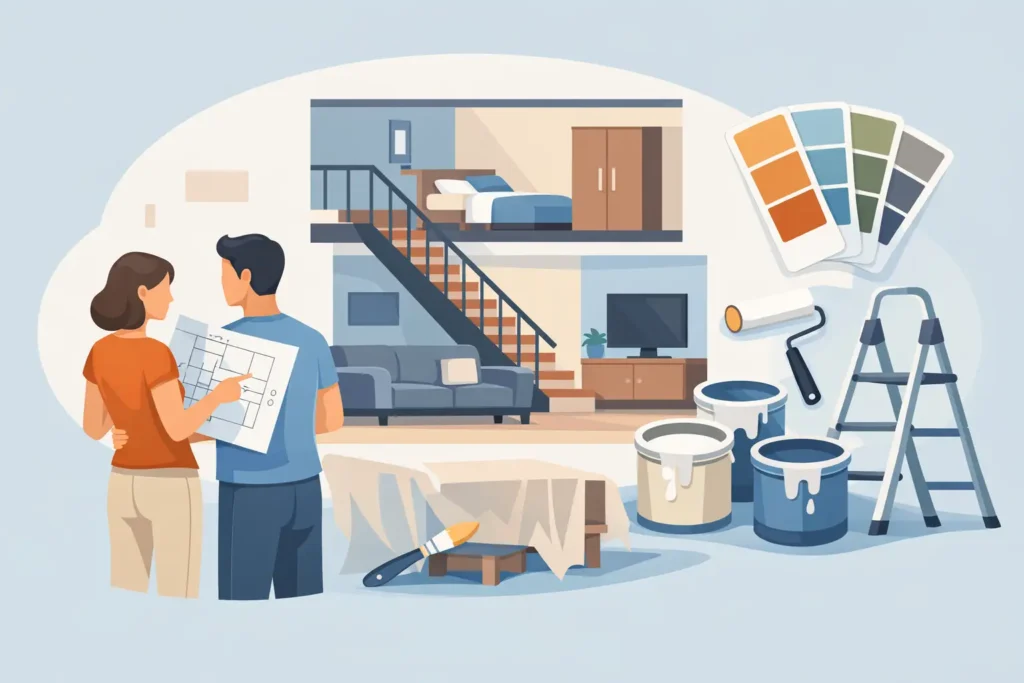
A maisonette repaint can go sideways fast when the plan starts with paint colors and ends with dust, delays, and last-minute add-ons. Good hdb maisonette repaint planning starts earlier – with access, room sequencing, surface condition, and a realistic timeline for a two-level home. If you get those right first, the finish looks better and the job feels far less disruptive.
A standard flat is one thing. An HDB maisonette is different because the layout creates more moving parts. You are not just repainting walls. You are managing staircases, double-height visual flow, upstairs privacy zones, downstairs common spaces, built-ins, old patchwork, and furniture logistics across two floors. That is why repaint planning matters as much as the painting itself.
Why hdb maisonette repaint planning needs a different approach
A maisonette usually has more wall area than owners first expect. Stair walls, upper corridors, bedroom clusters, and living spaces can make the scope feel manageable on paper but demanding on site. The staircase alone changes how painters protect floors, move ladders, and keep the work progressing safely.
There is also a practical issue many homeowners underestimate – access. In smaller flats, crews can move from one room to the next with limited setup changes. In a maisonette, painters often need a tighter room-by-room sequence so one level can stay usable while the other is being worked on. That matters if the family is staying in the unit during painting.
The age of many maisonettes adds another layer. Hairline cracks, old nail hole repairs, uneven previous paint jobs, water stains near windows, and chalky surfaces are common. A fast repaint without proper prep may look acceptable on day one and disappointing a few months later. Planning the surface repair scope early helps avoid that outcome.
Step 1 – Define the real scope before talking about finish
The first decision is not matte versus washable paint. It is scope. Are you repainting the full interior, only high-traffic areas, or just preparing for move-in? Each option changes cost, duration, and product choice.
For owner-occupiers staying long term, a full repaint usually makes more sense because partial repaints often expose differences in sheen, patching, and aged paint tone. For units going through a light refresh before move-in, some owners repaint bedrooms, living areas, and ceilings first, then return later for less critical spaces.
This is also the stage to identify surfaces beyond standard walls. Maisonettes often include stair rail areas, ceiling bulkheads, doors, frames, feature niches, and older built-in cabinetry nearby that can affect masking and finish lines. The more clearly the scope is defined upfront, the less room there is for variation later.
Step 2 – Plan around occupancy, not just contractor availability
A repaint schedule should match how the household actually lives. If the unit is vacant, execution is simpler and faster. If the family is still inside, sequencing becomes the whole game.
In occupied maisonettes, the most efficient approach is usually to divide work by zone. Downstairs common areas can be completed while upstairs bedrooms remain usable, then the crew shifts upward once furniture and loose items are consolidated. This reduces daily disruption and avoids moving everything twice.
If you are repainting before moving in, book the job after dusty renovation works are complete but before major furniture delivery. That sounds obvious, but many repaint delays happen because lighting installation, carpentry touch-up, or flooring correction is still happening. Fresh paint should not become the surface every other trade leans on.
For families with children, elderly parents, or work-from-home routines, timing matters even more. Fast mobilization is valuable, but only if the workflow is organized enough to keep the job controlled. Speed without planning creates stress. Speed with a proper sequence creates convenience.
Step 3 – Inspect the surfaces properly
This is where cost control really happens. A maisonette with sound walls and only minor imperfections can move quickly. A maisonette with repeated moisture marks, peeling patches, or settlement cracks needs more prep and may need different primers or sealers.
The key issues to inspect are straightforward. Look for hairline cracks around door frames and corners, previous patch jobs that have sunk or flashed through old paint, bubbling near windows, and dusty or powdery wall surfaces in older units. Ceiling stains should also be checked carefully because repainting over them without the right sealer often leads to bleed-through.
A proper site assessment should separate cosmetic flaws from actual problem areas. Not every crack is serious, but not every crack is harmless either. The point of planning is to identify what needs patching, sealing, sanding, or stain-blocking before the first coat begins.
Step 4 – Choose paint systems room by room
The best paint choice for a maisonette is rarely one product used everywhere. Different rooms have different demands, and smart planning reflects that.
Living and dining areas usually benefit from finishes that keep a clean, even appearance under changing daylight. Bedrooms often prioritize low odor and easy maintenance. Kitchens need better washability because grease and frequent cleaning matter more than a perfectly flat finish. Bathrooms are a separate conversation if moisture-prone ceilings or walls are involved.
This is where homeowners often overpay for premium paint in low-wear rooms or under-spec high-use areas that need durability. A contractor who explains paint ranges and suitability clearly saves you money in a practical way – not by cutting corners, but by matching the system to the room.
Color selection also needs a maisonette-specific lens. The staircase visually connects both levels, so disconnected palettes can make the home feel chopped up. That does not mean every room should be the same shade. It means transitions should feel intentional, especially from living space to stair hall to upper corridor.
Step 5 – Get serious about furniture, protection, and access
Many repaint jobs feel messy because this part was treated casually. In a maisonette, furniture movement is not a side task. It is part of project planning.
Large pieces should be consolidated before the crew starts, not shifted reactively during painting. Fragile decor, loose shelves, curtains, and electronics should be cleared in advance so masking and prep can happen quickly. Stair access should remain safe throughout the job, which means tools, drop sheets, and paint materials need disciplined staging.
Protection standards matter here. Floors, furniture, switches, and fixtures should be covered properly, especially in occupied homes. Good prep is not glamorous, but it is what separates a controlled paint job from one that feels like a renovation site.
Step 6 – Lock the timeline and scope in writing
This is where experienced homeowners protect themselves. A repaint proposal should clearly state what is included – prep, crack filling, sealer where required, number of coats, protection, touch-ups, cleanup, and handover. If the unit is a maisonette, the description should reflect the complexity of a two-story interior rather than treating it like a standard flat.
Fixed pricing is valuable because it removes uncertainty, but only when the scope is specific. If surface defects are extensive, ask whether repairs beyond normal patching are included or separately assessed. That is not being difficult. It is how you avoid friction once work starts.
Timeline expectations should also be realistic. Many interior paint jobs can be completed quickly with the right manpower and a clear plan, but drying conditions, repair needs, and occupancy constraints still matter. The best outcome is not the shortest promised timeline. It is the fastest timeline that can still be executed cleanly.
Common mistakes in HDB maisonette repaint planning
The biggest mistake is treating the project like a simple color refresh. In reality, most repaint issues come from underplanned prep, not paint selection. Another common problem is starting before other works are truly finished. That often leads to scuffs, dust contamination, and touch-up cycles that waste time.
Owners also underestimate how much visual inconsistency shows up in stair areas and connecting corridors. If those transitional spaces are ignored, the maisonette can feel unfinished even when the bedrooms and living room look fresh.
Then there is the budget trap. The cheapest quote may exclude the prep work that older maisonettes often need. The higher quote may include the exact repair and protection standards that keep the finish looking good longer. Price only makes sense when you compare scope properly.
When a done-for-you approach makes the most sense
If your priority is getting the unit painted without project-managing every step, a done-for-you contractor setup is usually the smarter route. Maisonettes have enough operational details that coordination becomes part of the service. Site assessment, product advice, prep, crack repair, protection, paint application, cleanup, and final touch-ups should feel like one controlled workflow.
That is especially true for owners on a move-in deadline or families who cannot afford a long, messy process. A systematic team with in-house coordination, clear scheduling, and accountable handover usually delivers more value than trying to piece the job together around price alone. Painting.com.sg is built around that exact expectation – fast execution, fixed scope, and minimal disruption for homeowners who want the job handled properly.
A fresh maisonette should not come at the cost of chaos. Plan the scope honestly, inspect the surfaces early, match the paint system to the rooms, and choose a workflow that respects your time. When the planning is right, the repaint feels less like a project and more like progress.
