
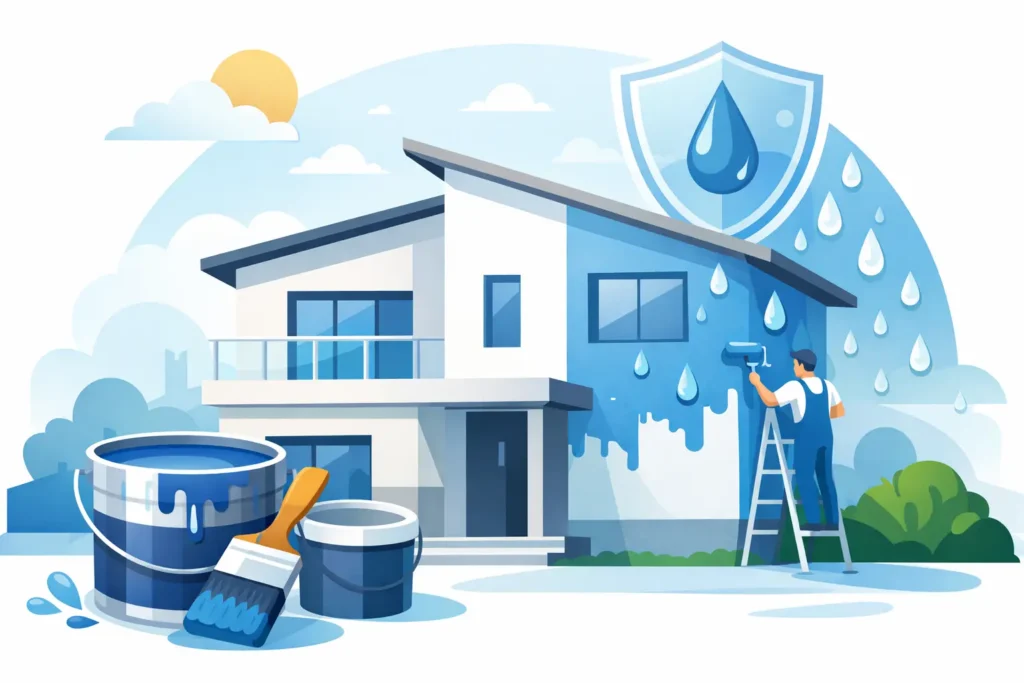
A landed home does not get a break from the weather. One week it is hard sun on the front facade, the next it is wind-driven rain hitting the side walls, and all year there is humidity working into hairline cracks and porous surfaces. That is why waterproof exterior paint for landed homes is not just about appearance. It is a protective system that helps prevent water ingress, blistering, premature peeling, and the expensive repairs that follow.
For homeowners, the real question is not whether to use a waterproof coating. It is which type makes sense for your house, your wall condition, and your maintenance expectations. A fast, neat paint job looks good on handover day. A properly specified exterior system keeps performing long after the scaffolding is gone.
Why waterproof exterior paint for landed homes matters
Landed properties have more exposed wall area than most apartments, and that changes the risk profile. You are not dealing with one protected corridor wall or a partially sheltered facade. You may have boundary walls, parapets, external columns, roof edges, planters, and broad elevations that take direct weather impact every day.
Once water starts entering through micro-cracks or weak coatings, the problems spread quietly. You might first notice discolored patches, paint bubbles, or chalking. Later, plaster can loosen, mold can form, and repeated moisture exposure can weaken the finish from underneath. Repainting over that without fixing the system is money wasted.
A good waterproof exterior paint system does two jobs at once. It repels rainwater from entering the wall while still allowing trapped moisture vapor to escape where the product is designed for breathability. That balance matters. If the coating traps moisture in the wrong substrate, failure can happen even with a premium product.
What to look for in a waterproof exterior paint system
The word waterproof gets used loosely, so it helps to look past marketing labels. For landed homes, performance depends on the full system – surface preparation, crack treatment, sealer, and topcoat compatibility.
1. Strong water resistance and weather durability
The coating should resist heavy rain, UV exposure, and constant humidity. In practical terms, that means better color retention, less peeling, and slower degradation on sun-facing walls. If your home has large west-facing surfaces, heat resistance becomes even more important because heat accelerates coating stress.
2. Crack-bridging ability
Exterior walls move. Heat, moisture, and age create fine cracks, especially around joints, window edges, and repaired plaster. Some waterproof paints are more elastic than standard masonry finishes, allowing them to span minor hairline cracks instead of failing immediately over them. This is one of the biggest differences between a basic repaint and a maintenance-focused exterior upgrade.
3. Good adhesion to the existing substrate
Not every house starts with clean, sound walls. Older landed homes may have chalky paint, patch repairs, efflorescence, or uneven textures from previous repaint cycles. The right sealer and prep process matter as much as the finish coat. If adhesion is weak, the most expensive topcoat will still underperform.
4. Dirt and fungus resistance
In humid conditions, exterior walls can collect algae, mildew, and staining faster than owners expect. A coating with anti-fungal and dirt-resistant properties helps walls stay cleaner for longer. That reduces maintenance pressure, especially for high areas that are difficult to access.
Not every exterior wall needs the same treatment
This is where many homeowners overspend or choose the wrong product. A full elastomeric waterproof coating may be the right answer for one elevation and unnecessary for another. It depends on wall condition and exposure.
If your walls are in generally good shape with only light weathering, a quality exterior sealer plus weather-resistant topcoat may be enough. If you already have recurring hairline cracks, signs of moisture ingress, or walls exposed to direct rain with little shelter, a more specialized waterproofing coating is often worth the extra investment.
Older houses also need closer inspection. If water is entering from failed joints, window perimeter gaps, roofline defects, or parapet details, paint alone will not solve the issue. In those cases, paint is part of the protection plan, not the entire repair. A responsible contractor should say that clearly instead of simply coating over symptoms.
The process that actually protects your home
A proper exterior repaint for a landed property should follow a controlled sequence. Speed matters, but speed without process leads to callbacks.
Step 1 – Site assessment
Before product selection, the walls need to be checked for chalking, cracks, flaking paint, damp spots, fungal growth, and previous patchwork. Different elevations often show different wear patterns. This inspection determines whether the job needs standard repainting, crack treatment, waterproofing upgrades, or local repairs before painting starts.
Step 2 – Surface preparation
This is where durability is won or lost. Loose paint must be removed. Contaminants, dust, and biological growth need cleaning. Hairline cracks should be opened and patched where required, and failed areas need proper making good. Skipping prep saves hours upfront and costs months in performance.
Step 3 – Sealing the surface
A suitable exterior sealer helps stabilize the substrate and improve adhesion of the finish coats. For porous or repaired walls, this step is non-negotiable. It also helps create a more consistent surface so the topcoat cures and performs properly.
Step 4 – Applying the waterproof exterior paint
The selected coating is applied to the manufacturer-recommended build. That means the correct number of coats and film thickness, not just enough to cover the old color. Too thin, and the membrane or protective layer may not perform. Too thick in the wrong conditions, and curing problems can happen.
Step 5 – Touch-ups, cleanup, and final checks
A professional handover should include checking for uniform coverage, edge detailing, repaired crack lines, and any missed areas around trims, ledges, and pipes. Exterior painting on a landed home involves more details than most owners realize, and those details affect both appearance and water protection.
Common mistakes homeowners make
The first is choosing by price alone. Exterior work on landed homes varies widely because access, wall condition, repair scope, and product type all affect cost. A low quote may exclude proper crack treatment, sufficient coats, or the right waterproofing product.
The second is assuming all paint is waterproof. Many standard exterior paints are weather-resistant but not designed to handle recurring moisture stress or bridge hairline cracks. They may still look fine at first, then fail early in vulnerable areas.
The third is repainting too late. Once moisture damage becomes visible indoors or plaster starts failing, rectification costs rise. A planned repaint cycle is usually more cost-effective than reactive repairs.
How to choose the right contractor for waterproof exterior paint for landed homes
You want a contractor who can explain the system in plain language. What product range is being used? Is crack patching included? What sealer is specified? How many coats are included? Are access needs, protection, cleanup, and touch-ups clearly defined?
You also want accountability. In-house teams, clear scope confirmation, and workmanship warranty matter because exterior issues may only show after rain and sun cycles. Fast mobilization is useful, but it should come with a structured process, not rushed execution.
For busy homeowners, convenience is not a small benefit. A done-for-you contractor should handle assessment, material recommendation, prep, painting, and cleanup without making you manage the site daily. That is where a process-driven team like Painting.com.sg stands apart – the goal is to get the job done properly, on schedule, and without turning your home into a long-running project.
When it is worth upgrading the paint system
If your landed home is exposed on multiple sides, has recurring crack lines, or has gone several years without a serious exterior maintenance cycle, upgrading to a more protective system is usually money well spent. The same applies if you are repainting before moving in or after renovation. It is more efficient to solve wall protection at that stage than to revisit the exterior after occupancy.
On the other hand, if your walls are relatively new and well sheltered, a premium weather-resistant system may be enough without going to the highest-spec waterproof coating everywhere. The right answer depends on condition, not hype.
A clean facade always looks good from the street. But the better reason to repaint is simpler: water is patient, and once it finds a weak spot, it keeps working. Choose a coating system that does more than freshen the color, and your home will stay easier to maintain for years.
