
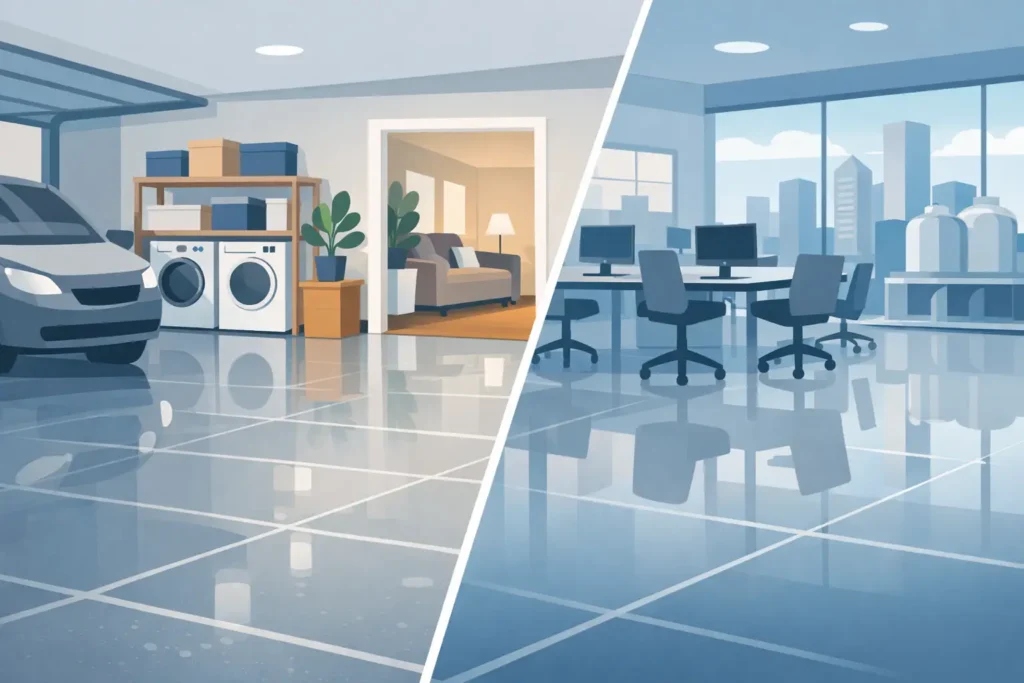
A bare concrete floor can make an otherwise finished garage, workshop, kitchen, or commercial space feel unfinished. It also collects dust, stains easily, and can be difficult to keep presentable. This epoxy floor review gives a practical answer to the question most property owners ask first: does epoxy actually deliver a cleaner, tougher floor worth paying for?
For the right surface and the right use, epoxy is one of the most effective concrete floor upgrades available. But it is not a paint-and-forget solution. Its appearance, grip, lifespan, and value depend heavily on floor preparation, moisture conditions, product specification, and installation quality.
What an Epoxy Floor Really Delivers
A properly installed epoxy floor is a resin-based coating system that bonds to prepared concrete. Unlike a basic floor paint that sits on top of the slab, a quality epoxy system is designed to create a hard, continuous finish that resists common wear from foot traffic, carts, tools, oil drips, light chemicals, and routine cleaning.
The immediate benefit is visual. Epoxy can turn dusty, patchy concrete into a uniform floor with a clean gloss or satin finish. Solid colors look sharp in utility areas and back-of-house spaces, while decorative flakes can hide minor dirt and add texture. For offices, showrooms, workshops, and service areas, that cleaner appearance can make a noticeable difference to how the property is perceived.
The practical benefit is easier maintenance. Concrete is naturally porous. Spilled oil, drinks, chemicals, and grime can soak in and leave permanent marks. A sealed epoxy surface gives spills less opportunity to penetrate, provided they are cleaned within a reasonable time.
Still, durability has limits. Epoxy is not indestructible. Sharp impact, repeated dragging of heavy metal equipment, movement cracks in the slab, and prolonged exposure to harsh chemicals can damage it. A good contractor should explain these limits before work starts, not after the floor has been handed over.
Epoxy Floor Review: The Pros and Trade-Offs
Epoxy earns strong reviews when the installation matches the environment. In a residential garage, storeroom, utility room, or covered patio, it can provide a polished finish with far less cleaning effort than raw concrete. In commercial settings, it helps create a controlled, professional-looking surface that stands up better to daily use.
Its main strengths are clear: it is easy to clean, visually flexible, resistant to many everyday stains, and more durable than standard concrete paint. It can also brighten a dim space because a lighter, glossier floor reflects available light.
The trade-offs matter just as much. A smooth glossy epoxy floor can be slippery when wet, especially near entrances, wash areas, kitchens, or loading zones. This is not a reason to avoid epoxy. It is a reason to specify the right system. An anti-slip aggregate or textured flake broadcast can improve traction without making the floor difficult to mop.
Epoxy also requires curing time. A floor may look dry after a short period, but it should not be exposed to vehicles, heavy furniture, or full operational use until it has reached the required cure stage. If a contractor promises an unrealistically fast turnaround without explaining the curing schedule, ask more questions.
Finally, epoxy does not fix failing concrete. It can cover discoloration and minor surface imperfections after proper repairs, but it cannot permanently stop structural slab movement or solve active moisture problems by itself.
The Make-or-Break Factor: Concrete Preparation
The biggest difference between a floor that lasts and one that peels is usually preparation. This is where low-cost quotations often leave out the work that matters most.
Before coating begins, the contractor should inspect the slab for cracks, hollow areas, old coatings, oil contamination, moisture, and uneven sections. Surface defects should be repaired where appropriate. The floor then needs mechanical preparation, typically grinding, to create the right profile for adhesion. Simply washing the concrete and rolling epoxy over it may look acceptable on day one, but it creates a much higher risk of coating failure later.
Moisture deserves special attention. Concrete can release moisture vapor even when it looks dry on the surface. If the slab has a moisture issue, the epoxy may blister, bubble, or detach. Ground-floor areas, older properties, spaces near wet zones, and slabs without an effective vapor barrier need a proper assessment before a coating system is confirmed.
For property owners, this means the best epoxy quotation is not always the lowest one. Compare the scope line by line. Does it include floor grinding? Crack patching? Degreasing? Moisture testing? Primer? A specified topcoat? Protection of adjacent walls and fixtures? Cleanup? These details determine whether you are buying a temporary cosmetic layer or a properly installed floor system.
Which Epoxy Finish Fits Your Space?
The right finish should follow the way the room is used, not just the color you saw online. A smooth solid-color finish works well in clean, low-risk areas where appearance is the priority. It is common in storerooms, private garages, and display areas.
For spaces that experience more dirt, wet shoes, or daily activity, a flake system is often the more forgiving choice. The flakes break up the visual surface, help conceal dust and minor marks, and can be paired with a textured finish for better grip.
Commercial properties may need a higher-build system, a chemical-resistant topcoat, or marked zones for walkways and work areas. A warehouse, kitchen-adjacent area, automotive workspace, and office pantry do not have the same flooring demands. Treating them as identical is how projects become expensive corrections.
Color selection also affects maintenance. White and very pale gray floors can look premium but show tire marks and dirt sooner. Mid-gray, charcoal, beige, and flake finishes generally provide a more practical balance between a clean appearance and everyday upkeep.
Cost: What Are You Actually Paying For?
Epoxy pricing is driven by floor condition, total area, coating thickness, system type, design, access, and preparation requirements. A small floor can have a higher cost per square foot because mobilization, edge work, masking, and setup remain necessary regardless of size.
Be cautious with quotes that state only “epoxy coating” without defining the system. That wording can cover anything from a thin single coat to a multi-layer installation with primer, body coat, decorative broadcast, and protective topcoat. The difference affects both price and expected performance.
A fixed, clearly written scope is easier to manage than vague allowances. You should know what happens if hidden cracks, heavy oil contamination, moisture issues, or existing failed coatings are found during site assessment. A professional contractor will identify likely risks early and explain the options before starting work.
For occupied homes and active workplaces, scheduling is part of the cost decision too. The cheapest plan is not always the most economical if it blocks access for longer than your move-in date, business operations, or maintenance window allows. A coordinated team that protects surrounding areas, prepares thoroughly, applies the system correctly, and cleans up after completion reduces the burden on the owner.
How to Judge an Epoxy Contractor Before You Commit
Start with the process, not the sales pitch. Ask how the concrete will be prepared, how moisture will be evaluated, and which exact products will be used. Ask whether anti-slip treatment is included where needed and what the return-to-service timeline is for walking, moving furniture, and vehicle traffic.
Then ask who is accountable for the work. A registered contractor with an in-house project team, documented scope, and workmanship warranty gives you a clearer point of contact if touch-ups or concerns arise. Portfolio photos are useful, but they should be supported by a site-specific recommendation rather than a one-size-fits-all package.
Painting.com.sg applies the same practical discipline used in its painting work: assess the existing condition, define the scope clearly, protect the surrounding property, complete the work systematically, and conduct a final handover. That approach matters because epoxy floor results are built long before the final coat goes on.
Maintenance That Keeps Epoxy Looking Good
Once cured, an epoxy floor is straightforward to maintain. Sweep or vacuum loose grit regularly because abrasive dust can dull the surface over time. Clean spills promptly and use a mild cleaner with a soft mop or scrub pad. Avoid harsh cleaners unless they are approved for the specific topcoat used.
Place protective pads under heavy movable equipment and avoid dragging sharp metal objects directly across the floor. If a section is chipped, scratched, or damaged by impact, arrange a repair early. Small repairs are easier to blend before dirt and moisture work their way beneath the coating.
Choose epoxy when you want a floor that works as hard as the space around it, but only after the slab, finish, traction needs, and installation plan have been checked properly. A clear scope and careful preparation will serve you far better than a fast quote with missing details.
