
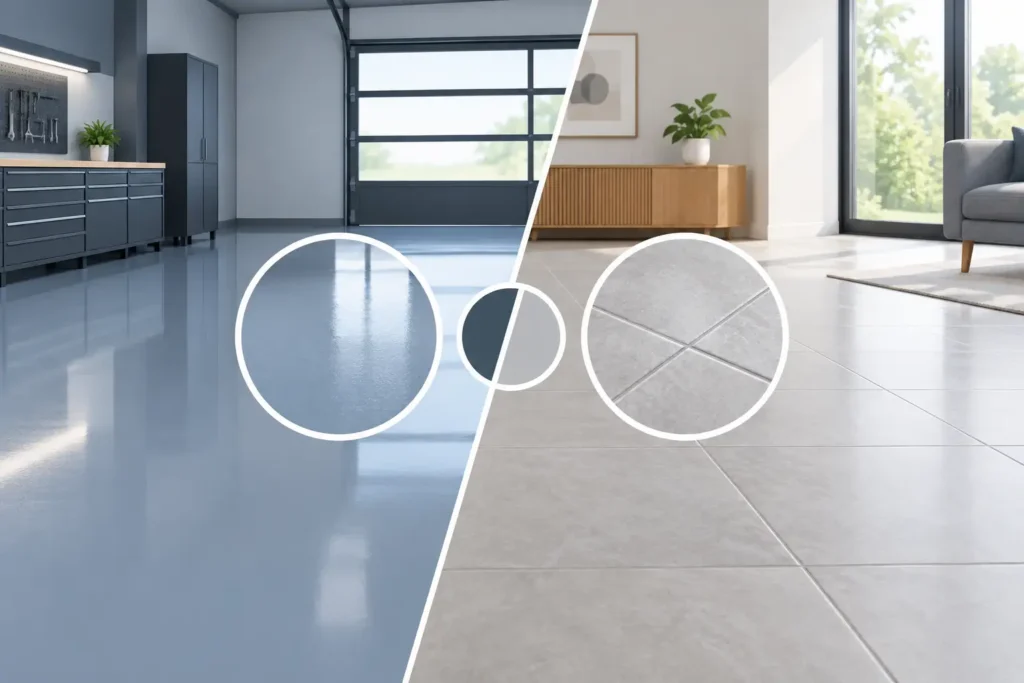
A loose tile, dark grout line, or cracked corner can change how an entire room feels. When comparing epoxy flooring versus tiles, the better choice is rarely about looks alone. It comes down to how the room is used, how much downtime you can accept, the condition of the existing floor, and how easily you want to maintain it after handover.
For a busy home, office, retail unit, or utility space, both finishes can work well. But they solve different problems. Tiles offer familiar design flexibility and can be repaired one section at a time. Epoxy creates a continuous, joint-free surface that is easy to clean and built for hard use when the substrate is properly prepared.
Epoxy Flooring Versus Tiles: The Quick Answer
Choose tiles when you want a broad choice of patterns, a more traditional residential finish, and the option to replace individual damaged pieces later. They are a practical fit for living areas, bedrooms, kitchens, and bathrooms where the floor design is a major part of the renovation.
Choose epoxy when you need a smooth, durable, low-joint surface that handles frequent cleaning, rolling loads, spills, or heavy foot traffic. It is especially effective for garages, warehouses, workshops, commercial back-of-house areas, clinics, industrial spaces, and some modern residential interiors.
The key is not to select a finish based on a showroom sample. A floor needs to perform under real conditions: humidity, cleaning habits, furniture movement, water exposure, and daily traffic.
What You Are Really Buying
Tiles are individual units installed over an adhesive bed, then finished with grout joints. Their visible grid can be part of the design, but those joints require attention over time. Grout can stain, trap dirt, crack, or discolor, especially around wet areas and high-use zones.
Epoxy is a resin coating system applied over a prepared concrete substrate. Once cured, it becomes a continuous surface without tile joints. Depending on the specification, it can be smooth, textured, glossy, matte, colored, or finished with decorative flakes.
This difference affects almost every decision that follows. Tile performance depends on the quality of the tiles, adhesive coverage, grout work, leveling, and expansion allowances. Epoxy performance depends heavily on moisture testing, concrete condition, surface grinding, crack treatment, primer selection, and curing conditions.
A premium epoxy system applied over damp or poorly prepared concrete can fail. Likewise, expensive tiles laid on an uneven or moving base can crack or sound hollow. Material selection matters, but workmanship and preparation decide whether the floor lasts.
Durability, Cleaning, and Daily Wear
Epoxy handles hard use with fewer joints
Epoxy is often chosen for practical reasons. With no grout lines, cleaning is faster and spills are easier to wipe away. This matters in garages, commercial kitchens, storage rooms, workshops, and business spaces where dust, grease, or repeated cleaning are part of normal operations.
A properly specified epoxy floor also resists many stains and chemicals better than standard grout. Heavy furniture, trolleys, rolling chairs, and equipment can move across the surface with less risk of catching on joints.
That said, epoxy is not indestructible. Sharp impacts can chip it, UV exposure can cause some systems to yellow, and a high-gloss finish may reveal scratches or dirt more readily than a textured surface. The right topcoat and finish level should match the room, not just the desired appearance.
Tiles bring proven residential performance
Quality porcelain tile is extremely durable, moisture-resistant, and well suited to everyday household use. It does not generally fade under sunlight, and it is available in finishes that resemble stone, concrete, timber, terrazzo, and more.
The maintenance trade-off is grout. Even sealed grout needs periodic cleaning, and light-colored grout can show stains quickly. In a busy household, especially one with children, pets, or frequent cooking, that extra cleaning becomes noticeable.
If a tile is chipped or cracked, one advantage is that it may be possible to replace only the affected piece. Keep extra tiles from the original batch. A matching replacement may be difficult to source years later once a design line has been discontinued.
Moisture and Slip Resistance Need a Room-by-Room Decision
Bathrooms, balconies, laundry areas, and other wet zones require more than a water-resistant floor. They need appropriate slope, drainage, and slip resistance.
Tiles are a familiar choice for wet rooms because textured porcelain options are widely available. Their grout joints can also add a small amount of traction, although dirty or damaged grout creates its own maintenance issue. For shower areas and floors with regular standing water, installation details such as waterproofing and drainage are more important than the tile color or format.
Epoxy can be suitable for wet spaces, but a plain glossy coating may be slippery when wet. If epoxy is being considered, specify an anti-slip aggregate or textured finish. This should be discussed before work starts because adding texture later is not as straightforward as choosing it during the coating design stage.
For commercial premises, do not treat slip resistance as an afterthought. Staff safety, customer traffic, cleaning routines, and local compliance requirements should shape the final specification.
Cost and Downtime: Look Beyond the Initial Quote
Tile pricing can appear simple because homeowners can see a per-square-foot material price. The complete cost includes tile selection, demolition of old finishes, adhesive, leveling, waterproofing where needed, grout, trim pieces, labor, debris removal, and replacement of damaged substrate areas.
Epoxy pricing varies based on the concrete condition and the coating system. A clean, sound slab is faster to prepare than a floor with moisture issues, old adhesive, oil contamination, cracks, or uneven patches. Decorative flakes, anti-slip texture, moisture barriers, and specialized topcoats also affect the final price.
Installation timing is equally important. Tile work often involves demolition, setting, grouting, curing, and cleaning. Epoxy requires surface preparation and curing time before the room returns to service. Neither option should be rushed simply to meet a move-in date.
For a small residential room, tiles may be easier to phase around an ongoing renovation. For a commercial or industrial area that needs a continuous, easy-clean surface, epoxy may justify its preparation requirements and scheduled shutdown window.
Epoxy Flooring Versus Tiles by Space
Living rooms and bedrooms
Tiles are usually the safer all-around choice when comfort, visual variety, and resale familiarity are priorities. Large-format porcelain can create a clean, contemporary look with fewer grout lines. Epoxy can work in a minimalist, industrial-style interior, but it may feel harder and more reflective than many homeowners expect.
Kitchens and dining areas
Both can perform well. Tiles offer a broad range of designs and good heat resistance. Epoxy offers quick cleanup and fewer joints where food or liquids can collect. If choosing epoxy, select a finish with enough texture to remain safe near sinks and cooking zones.
Bathrooms and balconies
Textured tiles are often the more practical default because they offer tested wet-area options and design flexibility. Epoxy should only be selected when the waterproofing, drainage, slip resistance, and coating system have been properly planned.
Garages, workshops, and utility rooms
Epoxy is frequently the stronger option. It provides a continuous surface that is easier to sweep, mop, and maintain around equipment, bicycles, storage racks, and vehicle-related dirt. Preparation is critical, particularly where oil stains or concrete moisture are present.
Offices, retail units, and warehouses
The decision depends on operations. Tiles suit customer-facing areas where design is central. Epoxy suits spaces that need fast cleaning, consistent appearance, and resistance to regular rolling traffic. A facility manager should also consider whether future repairs can be completed without disrupting trading hours.
The Installation Questions That Prevent Expensive Problems
Before approving either finish, get clear answers on the existing floor condition and the full work sequence. A reliable contractor should inspect the substrate instead of quoting from photos alone.
For epoxy, the work should cover four essential stages:
- Concrete inspection, moisture assessment, and identification of cracks, contaminants, or weak areas.
- Mechanical surface preparation, such as grinding, to create the right profile for adhesion.
- Repair of cracks and defects, followed by primer and the specified epoxy coating system.
- Curing, final inspection, and clear instructions on when foot traffic, furniture, or equipment can return.
For tiles, ask how the team will handle floor leveling, waterproofing, movement joints, tile cutting, grout selection, and hollow-tile prevention. Also confirm who removes debris and protects adjacent finishes. A low quote that leaves these items unclear can become a slow, disruptive project later.
Make the Decision Around Your Actual Routine
Do not choose tiles simply because they are familiar, and do not choose epoxy simply because it looks modern. Think about the floor at 7 a.m. on a busy weekday, after a spill, during a deep clean, or when furniture is being moved.
If you want a design-led residential surface with proven flexibility, tiles remain a strong choice. If you need a continuous floor built for cleaning efficiency and heavier use, epoxy deserves serious consideration. The right finish is the one that matches the room’s workload and is installed on a properly prepared base, so it continues to look intentional long after the renovation dust is gone.
