
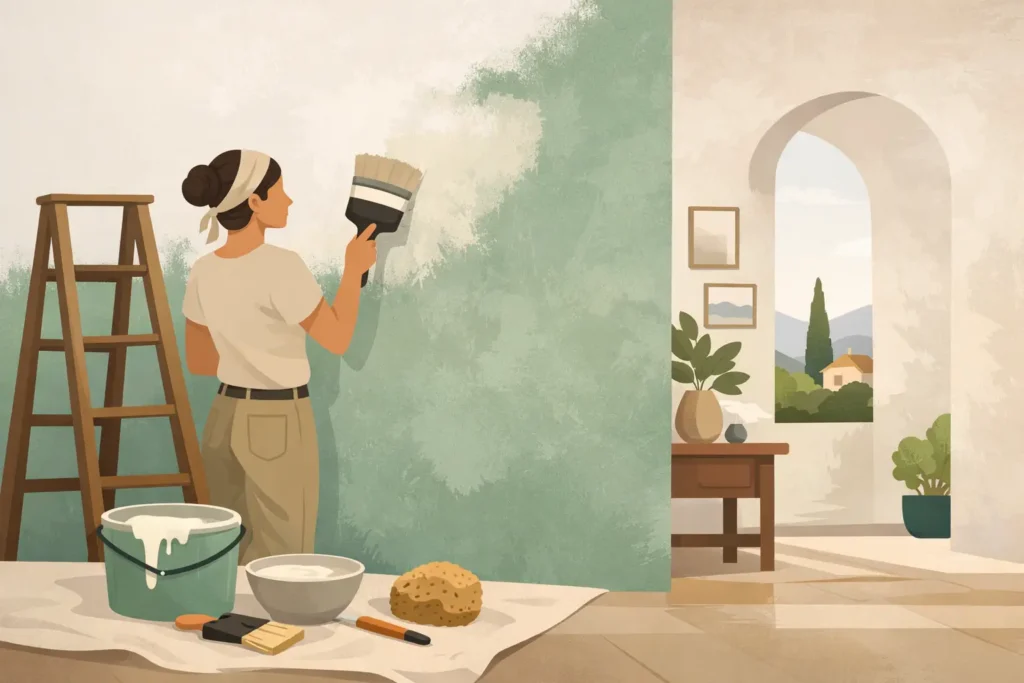
That soft, cloudy wall finish you keep seeing in boutique hotels and design-led homes is not regular paint with better marketing. Lime wash painting for walls creates a mineral, matte surface with movement, depth, and a hand-finished look that flat emulsion cannot fully copy. It can look exceptional, but it is not the right choice for every room, every wall condition, or every owner who wants a fast, low-maintenance result.
If you are deciding between a standard repaint and a decorative mineral finish, the real question is simple: do you want a wall that looks uniform, or a wall that looks alive? Lime wash gives you the second option. The trade-off is that it demands more care in product choice, surface prep, and application technique.
What lime wash painting for walls actually is
Lime wash is a mineral-based coating made from crushed limestone that has been processed into lime and mixed with water and natural pigments. Once applied, it soaks into porous surfaces and cures into a breathable finish with tonal variation. That variation is the point. Unlike standard interior paint, lime wash is expected to have soft movement, brush texture, and subtle shade shifts across the wall.
This is why people choose it for living rooms, bedrooms, feature walls, boutique retail spaces, cafes, and reception areas. It gives the room texture without adding cladding, panels, or wallpaper. You get a more architectural finish, but without heavy buildup on the wall.
That said, lime wash is not just a style decision. It behaves differently from conventional paint. It prefers the right substrate, responds to humidity, and relies heavily on workmanship. If the wall is poorly prepared, every uneven patch, filler mark, and repair area can show through.
Why homeowners and designers are asking for it
Most painted walls aim for consistency. Lime wash does the opposite in a controlled way. It creates depth, soft shadows, and a natural, chalky appearance that feels calmer than glossy or ultra-flat acrylic paint. In daylight, it changes throughout the day. Under warm lighting, it can look richer and more layered.
For homeowners, the appeal is usually aesthetic. It can make a new apartment feel less plain or help a renovated home avoid that overly sharp, freshly painted look. For commercial interiors, it can signal taste and intent without looking flashy. A well-executed lime-washed wall often feels more premium because it does not look mass-produced.
There is also a practical reason some clients consider it. Mineral finishes are breathable, which can help in certain settings where moisture behavior matters. But breathable does not mean maintenance-free, and it definitely does not mean suitable for every wet or high-contact area.
Where lime wash works best
Lime wash tends to perform best on interior feature walls, dry living spaces, bedrooms, dining areas, and low-traffic commercial walls where visual impact matters more than scrub resistance. It also suits homes that lean toward natural materials like wood, stone, linen, and warm neutrals.
Large uninterrupted wall planes usually produce the best effect. The movement in the finish reads clearly, and the space feels softer rather than busier. In smaller rooms, lime wash can still work well, but the color choice matters. Darker tones can feel dramatic and cocooning, while lighter tones tend to feel airy and more forgiving.
Where it may not be the best fit is in children’s rooms, corridors with frequent contact, kitchens with grease exposure, or any wall that needs regular wiping. Some lime wash systems can be protected with topcoats, but once you change the surface that way, you may also change the look that made you want lime wash in the first place.
The biggest misconception about lime wash
Many people think lime wash is simply an easier decorative paint. It is not. The uneven, layered effect may look effortless, but getting that finish under control takes planning.
The first issue is substrate. Traditional lime wash wants a porous surface so it can bond and cure properly. Modern walls often have existing paint layers, patch repairs, sealers, or skim coats that need the right primer or mineral-compatible base. If that system is wrong, adhesion and appearance can both suffer.
The second issue is expectation. Clients sometimes see sample photos and expect every wall to look exactly the same. Lime wash is a hand-applied finish. There will be natural variation. That is the feature, not the defect. A professional contractor should explain this upfront so the final handover feels like what was promised, not like a surprise.
The process matters more than the product label
A good lime wash result starts long before the first coat goes on. This is where many budget jobs go wrong.
1. Surface assessment
The wall needs to be checked for hairline cracks, old patching, moisture issues, peeling paint, and uneven absorption. Lime wash will not hide bad walls. It usually reveals them more clearly.
2. Surface preparation
This includes patching defects, sanding high spots, cleaning dust, and making sure the wall is stable. In some cases, the existing coating system needs a bonding or mineral primer to create the right base.
3. Sample and approval
Because lime wash has movement, a sample area is useful. It lets the owner confirm the tone, depth, and degree of variation before the full wall is completed.
4. Application technique
This is where experience shows. Brush direction, pressure, overlap, dilution, and timing all affect the final look. Two painters using the same product can produce very different walls.
5. Drying and review
Lime wash can lighten as it dries. Final judgment should happen only after proper curing, not halfway through the job.
For clients who want a done-for-you process, this is exactly why contractor selection matters. Decorative finishes are less forgiving than standard repaint work, so speed alone is not enough. You need controlled prep, clear product explanation, and a crew that knows how to repeat the finish consistently.
Cost, maintenance, and the trade-offs
Lime wash usually costs more than a standard interior wall paint system. Part of that is material, but most of it is labor and skill. The finish is application-sensitive, and the prep standard often needs to be tighter.
Maintenance is where expectations need to be realistic. Lime wash is beautiful because it is soft, matte, and natural-looking. Those same qualities can make it less ideal for aggressive cleaning. If you are the type of owner who wants to wipe every mark off the wall with a damp cloth, standard washable paint may fit your lifestyle better.
Touch-ups can also be tricky. On a flat acrylic wall, spot correction is often straightforward. On lime wash, patching one area may read differently from the surrounding movement unless it is blended properly across a wider section.
This does not make lime wash high risk. It just means it suits clients who prioritize finish quality and mood over perfect uniformity and heavy-duty washability.
Should you choose lime wash or regular paint?
If you want clean, predictable, durable walls across the whole home, regular premium paint is still the practical default. It is faster, easier to maintain, and better suited to family wear and tear.
If you want one or two standout walls that add depth and a more designed feel, lime wash can be worth the extra cost. It is especially effective in spaces where lighting, texture, and atmosphere matter.
A lot depends on how you use the room. A master bedroom feature wall is a very different case from a corridor beside the shoe cabinet. An office reception wall has different demands from a busy pantry. The best decision usually comes from matching the finish to the room, not forcing the same finish everywhere.
When professional execution is the better call
Lime wash is one of those finishes that looks simple until it goes wrong. Uneven absorption, visible patching, drag marks, or the wrong primer system can turn an expensive decorative wall into a redo.
For owners who want the effect without the hassle, working with a contractor that handles assessment, prep, material selection, protection, application, and cleanup is the smarter route. That is especially true when timelines matter or the property is occupied. A process-led team can tell you early whether lime wash makes sense for your walls or whether a different textured coating will deliver a similar look with fewer compromises.
At Painting.com.sg, that consultative step matters because not every wall should be sold the premium finish. The right recommendation is the one that gives you the look you want, the maintenance level you can live with, and a finish that still makes sense six months later.
If you love walls with character, lime wash can be a strong choice. Just make sure you are buying the full system – not just the look in a photo, but the prep, technique, and judgment that make the wall worth keeping.
