
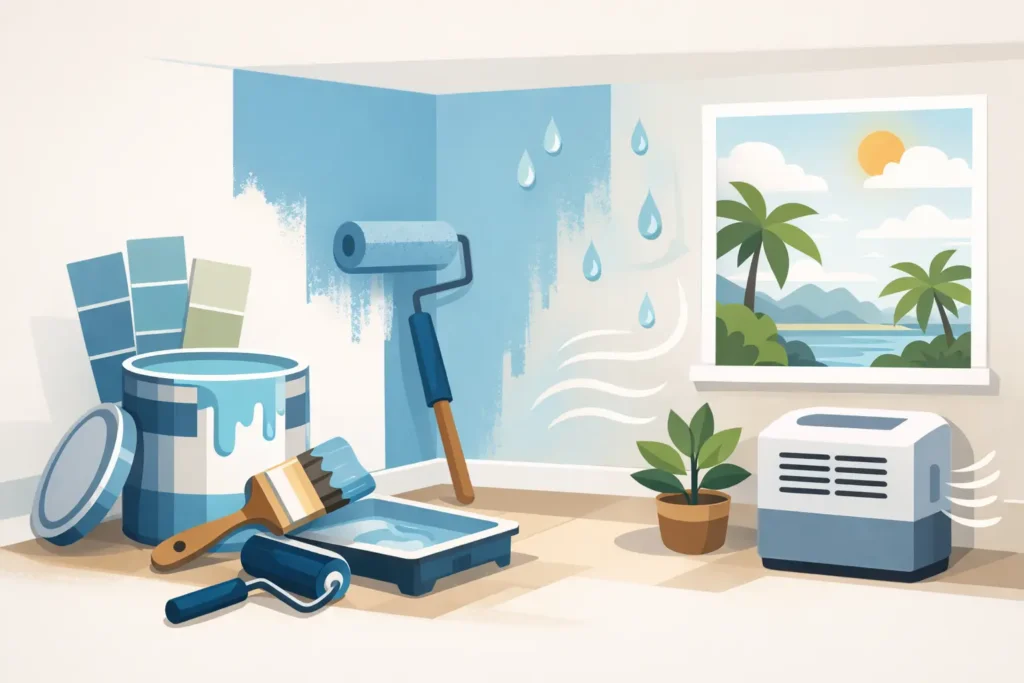
A bathroom wall that looks freshly painted on Monday can show dark specks, bubbling edges, or a damp smell within months if the wrong coating was used. The best wall paints for humid homes do more than provide a clean color finish. They resist moisture in the air, allow the wall to dry properly, and make routine cleaning far easier.
For homes in consistently warm, damp climates, paint selection is not just a design decision. It is part of protecting the property. HDB flats, condominiums, landed homes, and commercial spaces all have different exposure points, from shower walls and kitchens to poorly ventilated bedrooms and exterior-facing corridors. The right paint system starts with identifying those conditions before a single coat goes on.
What Makes a Paint Suitable for a Humid Home?
Humidity creates two different challenges. The first is surface moisture from showers, cooking, condensation, and wet laundry. The second is moisture moving through a wall due to leaks, cracks, failed waterproofing, or external rain exposure. Quality wall paint can manage the first challenge. It cannot permanently solve the second.
For interior walls, look for a high-quality acrylic or water-based emulsion paint designed with mold and mildew resistance. These paints form a durable film that stands up better to humid air than basic low-grade interior coatings. They also tend to have lower odor and dry faster, which helps keep disruption down during an occupied-home painting project.
The finish matters too. A washable eggshell, satin, or low-sheen finish is generally more practical in kitchens, bathrooms, laundry areas, and frequently touched hallways. These finishes are less absorbent and easier to wipe down than flat paint. Flat or matte finishes can still work beautifully in bedrooms and living rooms, but they should be selected from a premium washable range if the room has limited ventilation.
The Best Wall Paints for Humid Homes by Area
There is no single paint range that suits every room. The best result comes from matching the coating to the wall’s actual use, moisture level, and condition.
Bathrooms and shower-adjacent walls
Bathrooms need paint with strong anti-mold and anti-mildew performance, especially on ceilings and walls that receive steam every day. Use a washable acrylic bathroom paint over a properly sealed, dry surface. Satin or soft-sheen finishes are often the most practical balance: durable enough for cleaning without making every imperfection stand out under ceiling lights.
Paint should not be treated as a substitute for waterproofing inside a shower enclosure. Tiled shower walls, failed grout, cracked silicone, and leaking plumbing must be repaired first. If a wall is actively damp, painting over it only traps the problem behind a new finish.
Kitchens and laundry spaces
Cooking vapor, oil residue, and drying clothes can leave a thin film on nearby walls. Choose a washable, stain-resistant interior paint with mildew protection. A satin finish is usually a smart choice because it handles wiping better than matte paint and does not look excessively glossy.
Surface preparation is critical here. Grease residue prevents paint from bonding properly, even when the paint itself is premium grade. The wall should be cleaned, allowed to dry, patched where needed, and primed if there are stains, chalky areas, or repairs.
Bedrooms with condensation or limited airflow
Dark corners behind wardrobes, walls near air-conditioning units, and rooms kept closed for long periods are common locations for mildew. A breathable, low-VOC acrylic paint with anti-mold properties is a sensible choice. In these rooms, a premium washable matte finish can retain a calm, modern look while providing better protection than standard flat paint.
However, recurring mold behind furniture is often an airflow issue rather than a paint failure. Leave a small gap between large cabinets and external walls, address air-conditioner condensation, and air out the room regularly. Paint protects the finish, but ventilation protects the room.
Exterior-facing walls and sheltered outdoor areas
Exterior-facing walls receive heat, rain, and moisture movement from outside. They need an exterior-grade acrylic coating that resists weathering, algae, and moisture penetration while remaining flexible enough to handle minor expansion and contraction.
For covered balconies, service yards, and sheltered corridors, do not assume interior paint is sufficient just because rain does not hit the wall directly. Humid air, wind-driven moisture, and washing activity can still cause premature peeling. An exterior-rated paint system is the safer long-term choice where conditions are exposed.
Paint Features Worth Paying For
When comparing paint quotations, do not judge the product by color card alone. The lowest-priced paint can become the most expensive option if it requires another full repaint within a short period.
Prioritize paints that offer mold and mildew resistance, washability, good adhesion, low odor or low VOC performance, and suitability for the specific interior or exterior surface. For properties with hairline cracks, a flexible exterior coating or the correct crack-repair system may be necessary before painting. No topcoat can reliably hide an untreated moving crack.
Breathability is another useful feature, but it needs to be understood correctly. A breathable coating can allow water vapor to pass through more readily than a highly sealed film, reducing the risk of blistering in certain wall conditions. It is not a cure for water intrusion. If moisture is entering through a pipe leak, damaged facade, roof issue, or failed waterproofing layer, the source must be repaired before repainting.
Why Good Paint Still Fails in Humid Rooms
Most early paint failures are preparation failures. A wall may look dry on the surface while holding moisture beneath old paint layers. It may also be contaminated by dust, grease, soap residue, loose filler, or hidden mildew. Applying new paint directly over these conditions can lead to peeling, patchiness, and mold returning through the finish.
A dependable humid-home paint job follows a controlled sequence:
- Inspect the wall for active leaks, condensation, cracks, chalking, flaking paint, and mold.
- Protect floors, furniture, fixtures, and nearby surfaces before work begins.
- Remove loose material, clean affected areas, treat mildew, and allow the wall to dry fully.
- Patch cracks and holes, then sand repairs to create an even surface.
- Apply the right sealer or primer where staining, repairs, porous surfaces, or adhesion concerns require it.
- Apply the selected paint in the correct number of coats, allowing proper drying time between coats.
- Complete touch-ups, cleanup, and a final inspection under normal room lighting.
Skipping primer can be reasonable on a sound, previously painted wall with no stains or repairs. But using primer is often the right call after mold treatment, extensive patching, water staining, or when changing from a dark color to a light one. The decision should be based on the wall condition, not on a one-size-fits-all package.
Choosing Color Without Making Humidity Look Worse
Humidity does not limit you to white walls, but color affects how easily marks and mildew are noticed. Very dark shades can make water streaks, soap residue, and repaired patches more visible. Very pale shades brighten compact rooms but may show scuffs in busy hallways or near switches.
Warm whites, soft greiges, muted greens, and light blue-gray tones work well in humid spaces because they feel clean without making every small imperfection obvious. In bathrooms and kitchens, pair the color with the appropriate sheen instead of choosing a glossy finish simply because the room gets wet. Excess gloss can highlight uneven plaster, roller marks, and wall repairs.
A Faster Way to Get the Right Paint System
Homeowners should not have to guess whether a bathroom needs anti-mold paint, an exterior wall needs a weatherproof coating, or a stained ceiling needs sealing before repainting. A proper site assessment identifies the wall condition first, then matches the paint range, prep work, and number of coats to the job.
Painting.com.sg uses this practical approach for residential and commercial projects: assess the surface, explain suitable paint options, complete preparation and crack patching, protect the space, apply the specified coating system, and finish with cleanup and touch-ups. That process is designed to reduce avoidable repainting and keep occupied homes functioning with minimal disruption.
The right paint will make a humid room easier to maintain, but the best long-term result comes from treating moisture as a whole-property issue. Fix the source, prepare the wall properly, and choose a coating made for the room you actually live in.
