
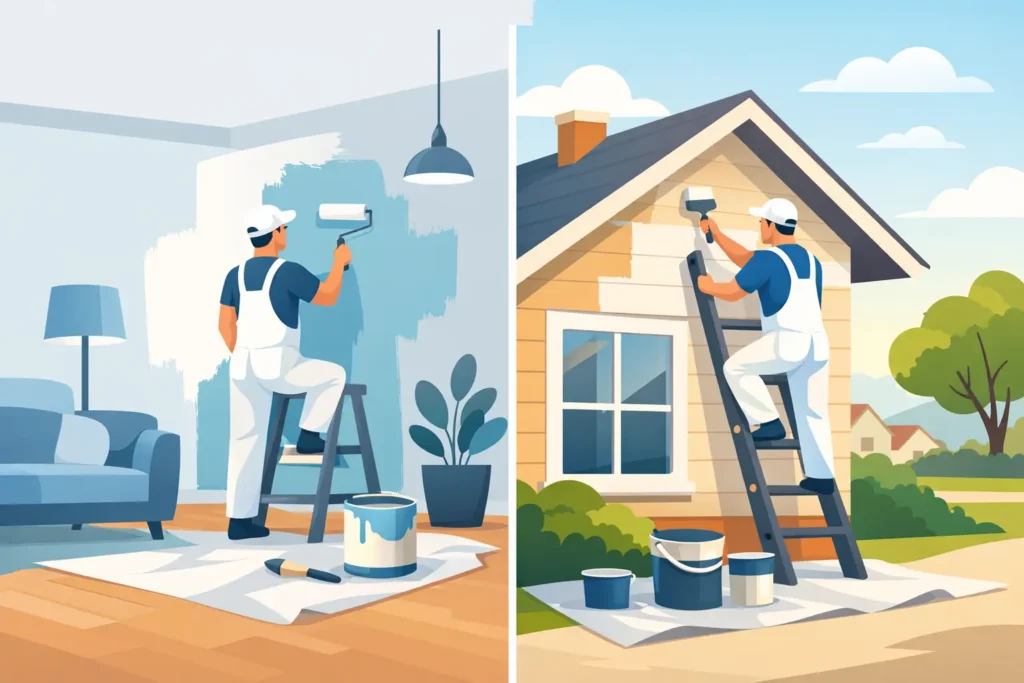
A paint job looks simple until you are the one coordinating it. Furniture has to be moved, surfaces need repair, the right paint system has to be chosen, and the timeline somehow has to fit around family life or business operations. That is why most property owners are not just buying paint. They are buying a faster, cleaner, more predictable result.
For homes and commercial spaces alike, interior and exterior painting services work best when they are treated as a managed project, not a casual labor job. The difference shows up in the finish, the timeline, and how much disruption you deal with along the way.
What good interior and exterior painting services actually include
A proper painting service starts long before the first coat goes on the wall. The real work begins with assessment. Every property has different surface conditions, moisture exposure, hairline cracks, old paint performance, and access constraints. A contractor that skips this stage usually pushes problems into the final finish.
That is why a structured painting process matters. First comes site inspection and scope confirmation. Then comes product and color consultation, followed by protection of floors, fixtures, and furniture. Surface preparation follows – and this is where a lot of workmanship is won or lost. Cracks need patching, unstable paint needs removal, and surfaces often need sealer before top coats are applied.
Only after prep is complete does paint application make sense. Even then, one coat is rarely enough if you want even coverage and durability. Cleanup, touch-ups, and final handover are not extras. They are part of the job.
If a quote sounds cheap, it usually means something in that chain is being reduced – fewer prep steps, thinner coverage, lower-grade materials, or outsourced labor with limited accountability.
Why speed matters, but only when the process is controlled
Most clients ask two questions first: how much and how fast. Both matter. If you are repainting before move-in, after renovation, or during a limited shutdown window, delays create immediate stress. The same goes for offices and retail spaces that cannot afford extended downtime.
Fast execution is a real advantage, but only when the crew, workflow, and materials are already organized. A contractor that can mobilize quickly and complete many jobs in 24 to 48 hours is valuable because it reduces interruption to your routine. But speed without supervision often creates patchy coverage, missed defects, and rushed cleanup.
The better standard is controlled speed. That means the team arrives with the job planned, the materials matched to the surface, and a clear sequence for prep, painting, drying, and touch-ups. It should feel efficient, not chaotic.
Interior and exterior painting services for different property types
Not all painting jobs should be priced or managed the same way. An HDB flat has a different scope from a landed home. A condominium unit has different access rules from a retail outlet. A warehouse or shophouse has a very different surface area, height requirement, and scheduling need.
This is why package-based pricing works well for standard residential unit types. It gives homeowners clarity upfront. If the property type and room count are straightforward, fixed pricing removes guesswork and makes approval easier.
For larger or more complex spaces, an onsite quote is usually the right move. That is not a sales trick. It is practical. Exterior walls, specialty coatings, ceiling heights, access equipment, weather exposure, and substrate condition all affect labor and material needs. A serious contractor should be direct about when a package fits and when a site visit is necessary.
Choosing the right paint system, not just the right color
Color gets the attention, but paint performance is what you live with. Interior walls in bedrooms, kitchens, common areas, and offices do not all face the same wear. Exterior walls deal with rain, heat, UV exposure, and surface movement. The product range has to match the use case.
This is where consultation matters. Some clients want the most economical system that still looks neat and fresh. Others want a premium finish with better washability, stain resistance, or longer-lasting exterior performance. Neither is automatically right or wrong. It depends on the property, the expected traffic, and how long you want the finish to hold up before the next repainting cycle.
A good contractor explains the trade-off clearly. Lower-cost paint can work for a quick refresh or rental turnover. Premium paint often makes more sense for owner-occupied homes, family spaces, feature walls, or commercial environments where appearance and cleanability matter every day.
The part most clients underestimate: surface preparation
If you want a paint job to last, prep is not optional. It is the foundation of everything you see later.
Hairline cracks, flaking paint, damp spots, chalky surfaces, and uneven patches all need attention before repainting. If they are simply covered over, they tend to reappear quickly. That is when homeowners start saying the paint “didn’t last,” when the real issue was that the surface was never stabilized properly in the first place.
Interior prep usually focuses on crack patching, smoothing, and sealer where needed. Exterior prep may require more aggressive treatment because weathered walls take more abuse. This is one reason exterior painting costs can vary more than interior work. Access and wall condition change the job significantly.
If you are comparing providers, ask how prep is handled. Not in vague terms. Ask what is included, what happens to visible cracks, whether sealer is applied when required, and how many coats are planned.
Accountability matters more than promises
Painting is one of those services where everyone claims quality. What matters is whether the contractor can stand behind the work after handover.
That is where business structure and warranty become important. An ACRA-registered contractor with an in-house team, project management, and a stated workmanship process gives clients more protection than a loosely assembled subcontract crew. Warranty terms also matter, not because every job will have an issue, but because a clear warranty signals accountability.
The no-middleman model matters too. Direct pricing to the owner usually means fewer layers between quotation, execution, and after-sales support. It reduces miscommunication and often helps with speed because the same company controls scheduling, crew deployment, and quality checks.
For property owners, this is not just about peace of mind. It is about knowing who is responsible if touch-ups are needed or if the scope needs to be clarified before work begins.
What homeowners and businesses should expect before saying yes
A professional painting proposal should feel easy to understand. You should know what is being painted, what preparation is included, what paint range is being used, how long the job is expected to take, and whether the price is fixed upon confirmation.
That clarity is especially important for busy homeowners who want a done-for-you solution. You should not need to coordinate separate people for protection, crack repair, painting, and cleanup. The entire point of hiring a full-service contractor is to get the result without managing the process yourself.
Commercial clients have an additional layer to consider: operating hours. Weekend work, day shifts, night work, and phased execution can make the difference between a practical repainting project and a disruptive one. Good painting services are not only about application skill. They are about operational planning.
For clients in Singapore, Painting.com.sg positions this exactly where many buyers want it – fast activation, fixed pricing for common property types, and end-to-end execution that removes the project-management burden from the owner.
When to repaint instead of waiting longer
There is a point where delaying repainting stops saving money. Interior walls with persistent stains, peeling areas, visible patch marks, or dated colors affect how the whole space feels. Exterior walls with failing paint are not only a visual issue. Once water intrusion or surface deterioration starts, future repairs can become more expensive.
Repainting before move-in is usually the easiest window because the space is clear and access is simple. After renovation is also smart, as long as heavy dust work is complete. For businesses, the best time is often tied to lease refresh cycles, low-traffic periods, or planned shutdown windows.
Waiting a bit longer can make sense if the existing paint is still stable and the repaint is purely cosmetic. But if the wall condition is declining, postponing usually makes the eventual job more involved.
The best painting service is not the one with the loudest promise. It is the one that makes the entire process feel controlled from the first site visit to the final touch-up, so you get a clean finish, a clear timeline, and one less thing to chase.
