
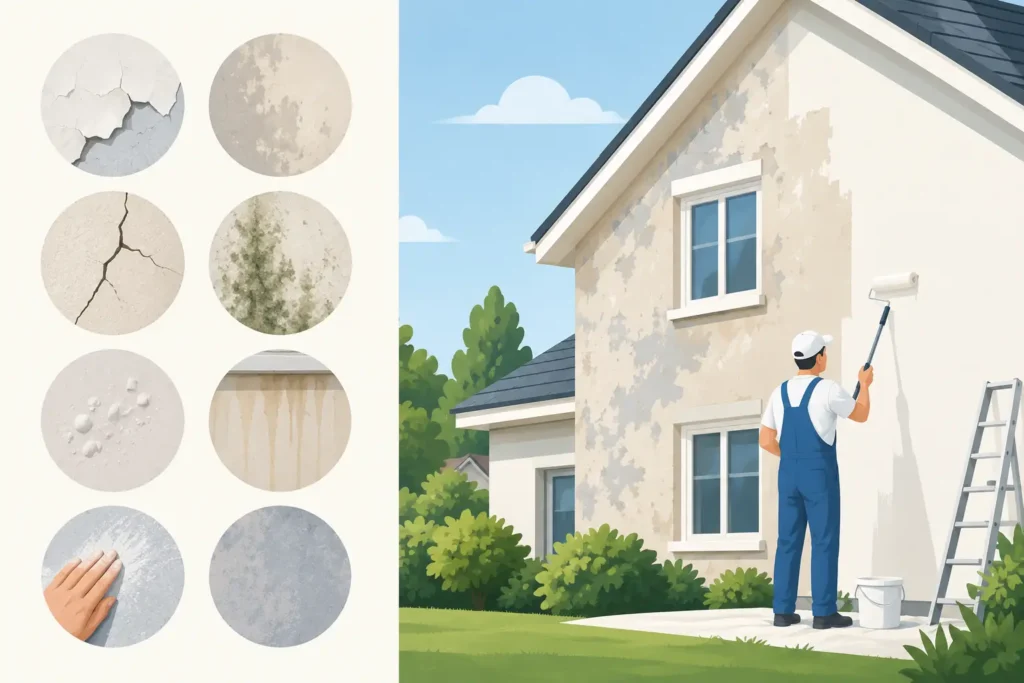
A facade rarely fails overnight. It starts with a fine crack beside a window, a chalky patch that leaves powder on your hand, or a dark stain that returns after every heavy rain. Knowing when exterior walls need repainting helps you act before a straightforward maintenance job becomes a larger repair issue.
For landed homes, shophouses, offices, and commercial properties in Singapore, exterior paint is more than a color finish. It is the first protective layer against intense sun, humidity, wind-driven rain, airborne dirt, and organic growth. The right time to repaint depends on the condition of the wall, the paint system used previously, and how exposed the building is – not simply how many years have passed.
When Exterior Walls Need Repainting: The Signs That Matter
1. The color has faded unevenly
A wall that has lost some brightness is normal, particularly on elevations that receive strong afternoon sun. But uneven fading is a more useful signal. If one section looks bleached while protected areas still look close to the original color, the coating may be reaching the end of its useful life.
Fading alone does not always mean the paint has failed. A good-quality exterior coating can still protect the substrate after its color dulls. However, if the property’s appearance matters for resale, tenant impressions, or brand presentation, repainting before the facade looks neglected is usually the better decision. For commercial buildings, a worn exterior can affect how clients view the business before they walk through the door.
2. The surface feels chalky or leaves powder behind
Run your fingers across a dry exterior wall. If a white, dusty residue transfers to your hand, the paint is chalking. This happens as sun and weather gradually break down the binders in the coating.
Light chalking can often be managed with thorough washing and proper priming before repainting. Heavy chalking needs more attention. Painting directly over a dusty surface can lead to poor adhesion, which means the new paint may peel sooner than expected. Surface preparation is not an optional extra here – it determines whether the new finish lasts.
3. Paint is peeling, flaking, or bubbling
Peeling is one of the clearest signs that repainting should not be delayed. It may be caused by age, trapped moisture, poor surface preparation from an earlier paint job, or incompatible paint layers. Bubbling can point to moisture beneath the paint film, especially near parapet walls, window ledges, balconies, gutters, or plumbing routes.
The trade-off is simple: a quick repaint may improve appearance temporarily, but it will not solve an active moisture issue. A professional assessment should identify whether the wall needs washing, scraping, crack repair, waterproofing work, sealer, or a full exterior paint system. The goal is to fix the reason for failure before applying fresh coats.
4. Hairline cracks are spreading or darkening
Small hairline cracks are common in rendered walls and concrete surfaces. In Singapore’s humid climate, though, those cracks can allow water to enter behind the paint. Once moisture gets in, staining, mold growth, and larger paint failure can follow.
Look closely at cracks around window frames, expansion joints, ledges, and areas where different materials meet. A crack that is wider, longer, or repeatedly reappears deserves investigation. Repainting works best after proper patching and sealing, not before. For deeper or structural-looking cracks, ask for the condition to be assessed separately rather than assuming paint alone is the answer.
5. Mold, algae, or persistent dark streaks keep returning
Green, black, or gray staining is common on shaded walls, damp boundary areas, and surfaces exposed to regular rain. It is tempting to cover these marks with paint, especially before moving in or handing over a property. But painting over active organic growth often traps the problem beneath the new coating.
The wall should first be treated, cleaned, and allowed to dry. Then the paint range should match the exposure level of the area. A sheltered wall and a rain-facing wall do not necessarily need the same product. This is where clear advice on paint suitability matters more than choosing a color from a chart.
6. Water stains appear inside near exterior-facing walls
Interior water marks, damp patches, or blistering paint near an exterior wall can be an early warning that water is entering through cracks, joints, or failed exterior coatings. The source is not always the facade. It could be a roof detail, window seal, pipe, or neighboring structure.
Still, exterior paint should be part of the inspection. Addressing the visible indoor stain without checking the outside wall can lead to repeated repairs. A proper site assessment looks at both sides of the affected area and recommends the right order of work.
7. The previous paint job is approaching its maintenance cycle
As a broad guide, many exterior paint systems need attention every five to eight years. Highly exposed walls may need repainting sooner, while well-protected elevations can last longer. The product quality, preparation standard, building design, and weather exposure all affect the timeline.
Do not treat the calendar as the only trigger. A six-year-old facade in good condition may only need cleaning and minor touch-ups. A three-year-old wall with widespread peeling may need corrective repainting now. Condition-based maintenance protects the property better than waiting for a fixed date.
8. You are preparing for a sale, tenancy, opening, or renovation handover
There are practical reasons to repaint even when the coating has not fully failed. A fresh exterior improves curb appeal before a property viewing, gives a renovated landed home a finished look, and helps a business present a professional image before reopening.
The key is timing. Exterior painting needs dry working windows, access planning, protection for landscaping or vehicles, and enough time for cleaning, patching, sealing, and multiple coats. Starting early avoids rushed work just before a move-in date or commercial launch.
What a Proper Exterior Repainting Process Should Include
Exterior repainting should not begin with a paint roller. The visible finish is only as reliable as the preparation beneath it. A systematic contractor will inspect the condition, confirm the scope, and explain which paint system suits the wall rather than applying one product everywhere.
A dependable process usually follows four stages:
- Assessment and protection. The team checks paint failure, cracks, stains, access requirements, and areas affected by moisture. Nearby windows, floors, landscaping, signage, and fixtures are protected before work starts.
- Cleaning and repairs. Dirt, chalking, loose paint, and organic growth are removed. Cracks and damaged areas are patched, while relevant joints or vulnerable details are sealed.
- Priming and paint application. The correct sealer or primer is applied where needed, followed by the specified number of exterior paint coats. This is where product selection affects durability, washability, color retention, and resistance to weathering.
- Touch-ups and handover. The work area is cleaned, finishes are checked, and touch-ups are completed before handover. A clear warranty should state what is covered and for how long.
For occupied homes and active workplaces, planning matters as much as workmanship. Access routes, parking, operating hours, noise limits, and weather contingencies should be agreed upfront. A fast turnaround is valuable only when preparation and quality control remain intact.
Check Ownership and Approval Requirements First
Not every exterior wall can be repainted at an owner’s discretion. For condominium units, facade colors and exterior works may require management approval. HDB residents should check the applicable rules because external common facades are generally managed separately from the interior of a flat. Landed homeowners may also need to consider estate guidelines, shared boundary walls, and access arrangements.
This step prevents a frustrating situation where materials are selected and painters are scheduled before permission is confirmed. For offices, retail spaces, and industrial properties, coordinate repainting with the building manager, especially when scaffolding, boom lifts, restricted loading areas, or after-hours work are involved.
Choose Repainting Before Small Defects Become Larger Repairs
The most cost-effective repaint is usually planned while the problem is still limited to the coating. Once water repeatedly enters through cracks or failed paint, the work can expand to include more extensive repairs, drying time, waterproofing, and replacement of damaged finishes.
A professional exterior painting team should make the scope easy to understand: what needs cleaning, what needs patching, which paint is proposed, how many coats are included, the expected timeline, and the warranty after completion. Painting.com.sg approaches this as a done-for-you process, so homeowners and property managers can move from assessment to final cleanup without coordinating multiple parties.
If you can see peeling, chalking, recurring stains, or cracks spreading across the facade, do not wait for the next maintenance cycle. Arrange an assessment while the wall can still be restored with a clear, controlled repainting plan.
